Welcome to Rio de Janeiro
Where Rio Stays Wild: Grumari, Prainha, and Recreio dos Bandeirantes
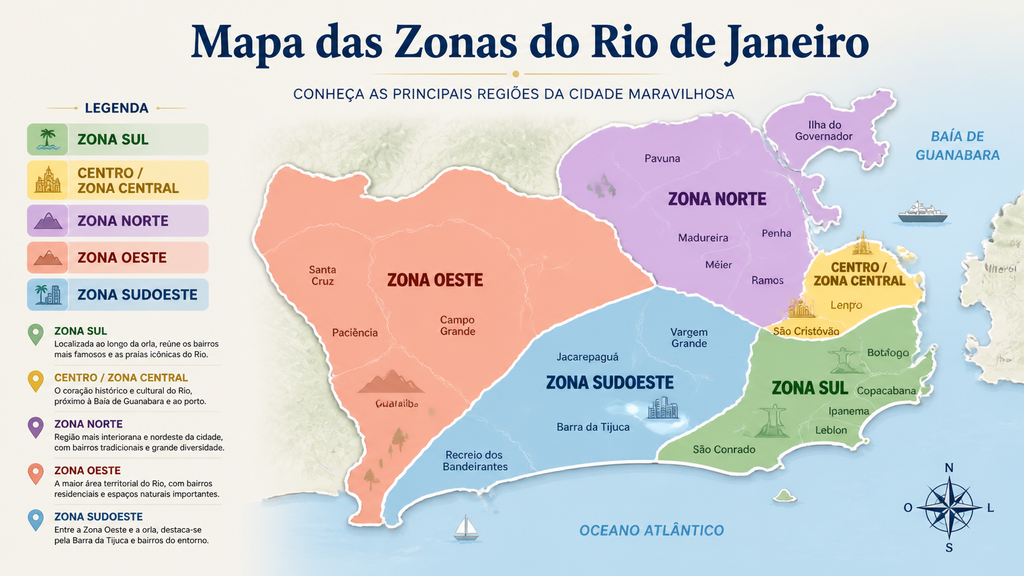
Drive far enough west through Rio de Janeiro and something shifts. The apartment towers thin out, the noise fades, and the Atlantic reasserts itself. Past Barra da Tijuca, where the city loosens its grip, a stretch of coastline begins that most visitors never reach — and that is precisely what makes it worth the trip. Grumari, Prainha, and Recreio dos Bandeirantes form a trio of beaches that tell you what the ocean is really about: wild in places, powerful in others, and always honest. Knowing these three spots means knowing a side of Rio that has nothing to do with postcards.
Getting here is straightforward. By car, take the Estrada do Joá or the Avenida das Américas westward, through Barra, until the road begins to climb and the views open up. Uber and 99 both operate reliably in this part of the city and are the best alternatives if you’re not driving. Leave early — just after seven in the morning if you can manage it. Not only to beat traffic, but because this coast in the early sun is something the midday heat cannot replicate.
Grumari: Silence as a Luxury
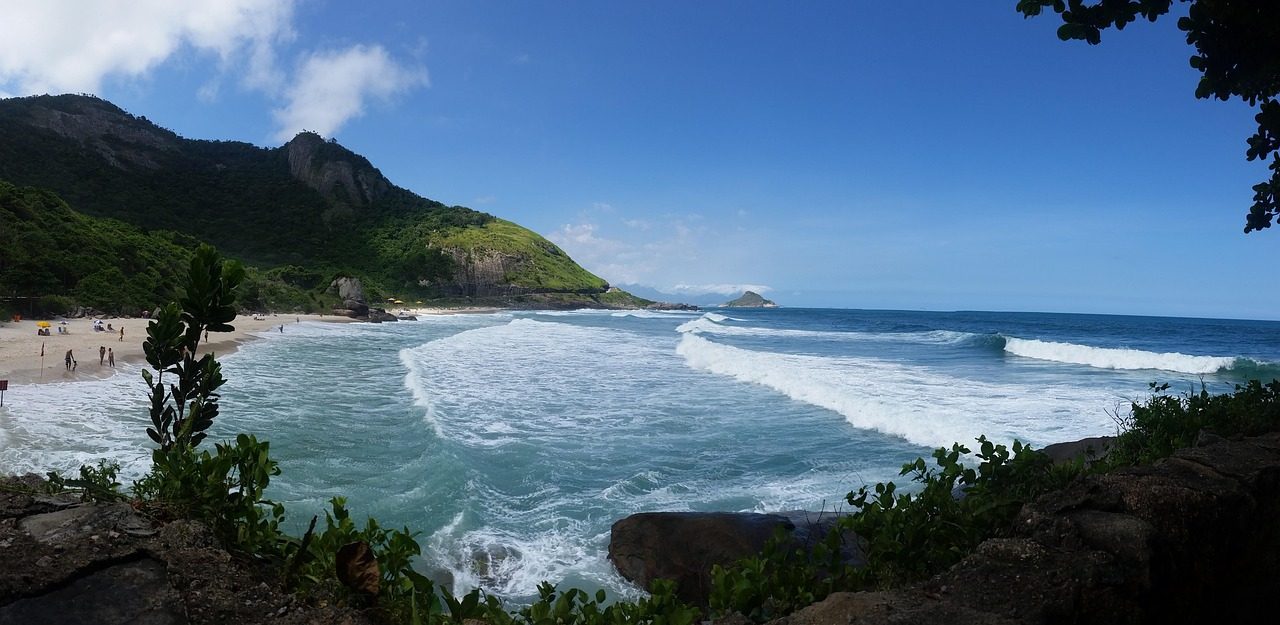
First-time visitors to Grumari tend to stop in their tracks. It is the quiet that hits first — the kind of quiet you don’t expect from a city of seven million people, and that is all the more striking for it. The beach sits inside the APA Grumari environmental protection area, a designation that has kept developers at bay and the landscape intact. There are no high-rises blocking the horizon, no souvenir stalls, no advertising banners. Just sand, water, and the sound of birds moving through the restinga — the coastal shrubland that rolls softly behind the dunes.
The sand itself is pale and fine, almost powdery, and it doesn’t cling the way coarser sand does. The water shifts between celadon and deep Atlantic blue depending on the hour, and it hits the skin pleasantly cool after the drive through the heat. The surf is moderate — strong enough to make swimming feel alive, gentle enough that less experienced swimmers won’t feel out of their depth. Near the shore, small groups stand waist-deep and talk; further out, occasional beginners wobble on simple boards and grin.
The infrastructure here is deliberately minimal, and that is not a flaw — it is the point. A handful of wooden kiosks sell fresh coconut water, grilled fish, pasteis, and cold beer. The vendors know their regulars, laugh easily, and cook with the unhurried confidence of people who are not performing for tourism. Beach chairs are available to rent if you want them; if you’d rather spread a sarong on the sand, you’ll have more than enough room. Showers and restrooms exist and meet the standard of a protected natural area — functional, basic, fine.
A walk up onto the dunes behind the beach is not optional. The paths aren’t marked, but they don’t need to be: you simply follow your feet into the grass and within a few minutes the entire coastal arc opens up below you. Photographers will want to be here in the late afternoon, when the light falls at an angle across the water and the dunes throw long shadows. With a little luck, you’ll spot butterfly species that have become rare on the mainland, or the tracks of raccoons pressed into the damp sand near the drainage channels.
One thing to know before you go: cell service in Grumari is often weak or nonexistent. Treat it as the invitation it is. Bring at least two liters of water per person — the kiosks can be overwhelmed when crowds show up, and Rio’s summer heat takes more out of you than you’d expect. Reef-safe sunscreen is a small consideration that goes a long way toward protecting the ecosystem you came to enjoy.
Prainha: Where the Real Waves Are
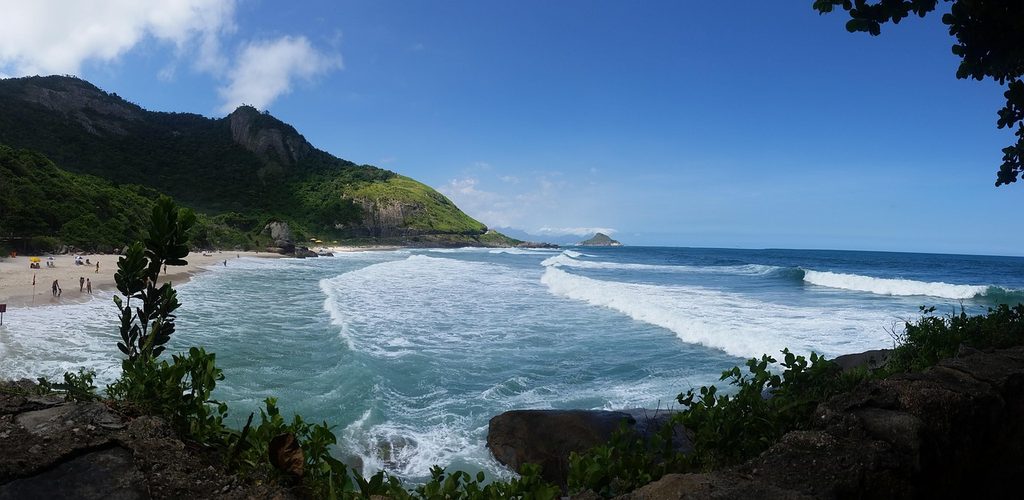
A few kilometers east of Grumari, reached by a winding road that threads between green hillsides and the sea, Prainha announces itself before you even park the car. The name means something like “little beach,” but what the place delivers is anything but small. Among those who know Rio’s coastline well, Prainha is considered one of the best surf breaks in the city — and the moment you see the water, you understand why. The waves here break with a consistency and shape that is rare: typically left-handers, long and clean, offering a smooth ride that suits both longboarders looking to glide and shortboarders chasing sharper turns.
The beach itself is narrower than Grumari, framed by rocks and hills that give it an almost amphitheater-like feel. The land drops steeply behind the sand, so even from the upper parking area you can see the turquoise water and the white crests of the breaking waves below. That first view — the ocean laid out beneath you, the low rumble of the surf — is one of those moments that tends to stay with people.
The local surf scene is lively without being territorial. Regulars who have been reading these waves for years are generally happy to offer a tip to newcomers, or to explain what conditions are doing on a given day. The swell season runs roughly from March through November, when Atlantic groundswell becomes more consistent and powerful. Mornings, just after sunrise, offer the cleanest conditions: the wind still light, the waves well-defined, the light doing everything right. Several small surf schools operate at Prainha and run lessons for all levels. A good instructor makes the difference between frustrated paddling and that first real ride — and Prainha, with its forgiving left-handers, is an ideal place for that moment to happen.
Non-surfers have nothing to feel left out about. At the western end of the beach, where the surf mellows, there are quieter spots to lie down and watch. There is a particular pleasure in observing surfers from the shore — the way they read the water, position themselves, paddle hard, and rise — a slow-motion negotiation with the sea that looks almost meditative from a distance. Dolphins sometimes surface just beyond the break, moving parallel to the coast, close enough that you can hear them breathe.
The food stalls at Prainha are simple and good: açaí bowls with granola and banana slices, fresh-squeezed juices, grilled skewers, cold drinks. The quality is better than you might expect this far from the city center. A coconut water after a session in the water has the same status here as a morning coffee anywhere else — it is ritual, not refreshment. And a word that deserves repeating: the ocean commands respect. Even strong swimmers can be caught off guard by rip currents when the swell picks up. The lifeguard flags mean what they say — green is clear, yellow calls for caution, red means stay out. These are not suggestions.
Recreio dos Bandeirantes: Where the City Meets the Sea
Recreio dos Bandeirantes is the longest and most urban of the three, and yet it holds onto a character that sets it clearly apart from the beaches closer to the city center. The strand stretches for several kilometers along the Avenida Lúcio Costa, the wide artery that connects Barra to the far west of Rio. What looks at first glance like a straightforward city beach reveals, on closer inspection, a surprising range of moods and possibilities.
The western end of Recreio, where it borders Prainha, is still raw and quiet. The surf here is solid, and there are several breaks that locals prize precisely because they don’t attract crowds — the kind of open secret passed along by word of mouth. Moving east, the beach widens, the promenade fills out, and the infrastructure becomes more generous. Quiosques line the shore, each with its own personality: one known for its frutos do mar, another for particularly good limonadas. The regulars come every day, know the owners by name, and spend hours in the shade of beach umbrellas without anyone thinking anything of it.
For the active traveler, Recreio is generous. The bike path running along the Avenida Lúcio Costa is one of the longest in the city and gets used by everyone from serious cyclists logging training miles to families with toddlers on cargo bikes. Rental stations are easy to find. If the water is more appealing, stand-up paddleboards and kayaks can be rented to explore the lagoon that runs alongside the beach, connected to the sea by a narrow channel. That lagoon is its own world entirely — still, green-banked, shaded by mangroves, home to herons, kingfishers, and the occasional sea turtle. It is quietly extraordinary, and most visitors walk right past it.
The food at Recreio covers real ground. Street stalls sell pasteis and coxinhas; the quiosques grill fresh fish to order; restaurants in the side streets serve Brazilian cooking with international influences. A moqueca de camarão — shrimp slow-cooked in coconut milk and palm oil — eaten in the evening breeze with the sound of the ocean still in your ears is one of those simple meals that somehow becomes a memory.
The facilities are noticeably more developed here than at Grumari or Prainha: showers and changing rooms at regular intervals, well-maintained restrooms, accessible pathways for visitors with mobility needs. Lifeguard towers are evenly spaced along the full length of the beach, and the same flag system applies here as everywhere else in Rio. One practical note: on weekends and public holidays, the sections closest to the main access points from the Avenida fill up early. Walk a few hundred meters further west and the beach opens up again — there is always room if you’re willing to move.
Three Beaches, One Trip — and Why the Difference Matters
It would be easy to treat these three places as interchangeable stops on a day trip checklist. That would be a mistake. Grumari, Prainha, and Recreio are not variations on the same theme — they are distinct characters, each with its own rhythm and its own demands on the visitor. If you want to see all three in a single day, start at Grumari in the morning while the beach is nearly empty and the light is still soft. Move to Prainha around midday, when the waves are at their most consistent and the surf scene is in full swing. End the afternoon at Recreio, when the sun has dropped and the promenade comes to life.
That said, each of these places deserves a visit on its own terms. Grumari asks for patience — you don’t go there to fill a schedule, you go to let the schedule dissolve. Prainha asks for a willingness to engage, to put yourself in the water or at least close to it. Recreio is the most forgiving of the three, the easiest to spend an entire day in without running out of things to do.
What connects all three is an attitude toward the sea that you don’t find everywhere. The ocean here is not a backdrop or a amenity. It is a presence — sometimes calm and welcoming, sometimes forceful and demanding. Meeting it on those terms, with curiosity and a little humility, is what turns a beach trip into something you actually carry home with you. Not just a tan, but a feeling: that Rio extends far beyond what most visitors see, and that its western coast, in its wildness and its quiet, may be the truest version of all.
Getting Ready: What to Know Before You Go
A little preparation goes a long way at these beaches. An early start is the single most useful thing you can do — it saves you from traffic, from crowds, and from missing the hours when the light and the conditions are at their best. High-SPF sunscreen is non-negotiable; Brazilian sun is more intense than most visitors are used to, even on overcast days. Reef-safe formulas are widely available and worth seeking out. Bring at least two liters of water per person, especially for Grumari where supply is limited. A light rain jacket takes up almost no space and earns its keep when one of Rio’s fast-moving afternoon showers rolls in — they rarely last long, but they are real.
Keep valuables close at Grumari and Prainha, or leave them locked in the car. At busier sections of Recreio, a small padlock on your bag is simple common sense rather than excessive caution. And finally: a little Portuguese goes a long way. “Oi” and “Tudo bem?” cost nothing and open doors — to a conversation, a recommendation from a local, sometimes to one of those unexpected evenings that end up defining a trip.
These three beaches are no longer unknown. But they have not lost themselves either. Come the way the cariocas come — unhurried, facing the water, moving with the rhythm of the waves.