Welcome to Rio de Janeiro
How Tourists Can Pay by Pix in Brazil
Walk into any restaurant or supermarket in Brazil and you will see the same small square of black-and-white pixels: the Pix QR code. For a Brazilian, paying means opening the banking app, pointing the camera, and confirming. For a foreign visitor without a Brazilian CPF tax number, that everyday gesture raises an obvious question. Can a tourist use Pix at all, or is the system closed to anyone who has never registered with the Brazilian tax authority?
For years the answer was effectively no. Pix was designed to move money between accounts held at Brazilian institutions, and opening such an account as a non-resident meant navigating the CPF application, proof of local residency, and processing times measured in weeks. That is a poor fit for a two-week holiday. What has changed is not Pix itself but the layer built on top of it. A small group of cross-border wallets now lets a foreign visitor scan a merchant’s QR code and settle the bill in Brazilian reais without ever opening a Brazilian bank account or obtaining a CPF. The essential distinction is between holding Pix, which still requires a local account, and paying by Pix, which no longer does.
Why the QR code matters more than a bank account
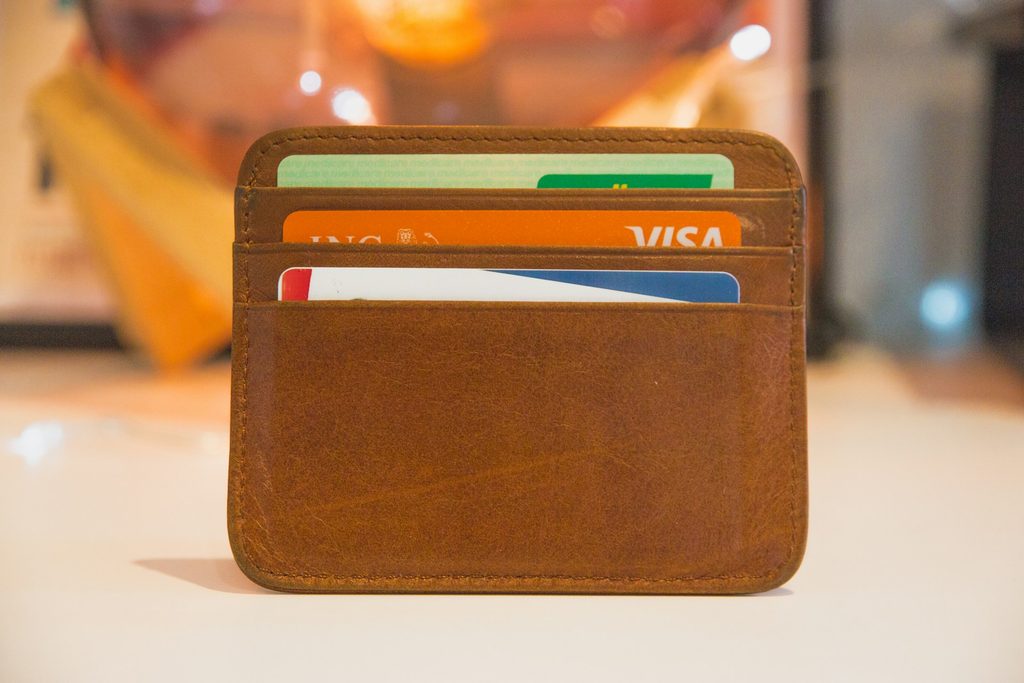
Tourists do not want Pix because they are eager to hold Brazilian currency. They want it because a growing share of everyday transactions here simply assumes it. Credit and debit cards remain widely accepted, and major hotels and established restaurants will process a foreign Visa or Mastercard without complaint. But at the margins, the Pix QR code has become the default. Street vendors, small restaurants, market stalls, taxi drivers, and many supermarket checkout lanes route payment through a code displayed on a screen or printed on a card. When a foreign card is declined at a terminal, the QR code is the fallback the merchant offers. A visitor who cannot use it is locked out of that fallback at the counter.
What a Pix QR payment actually involves
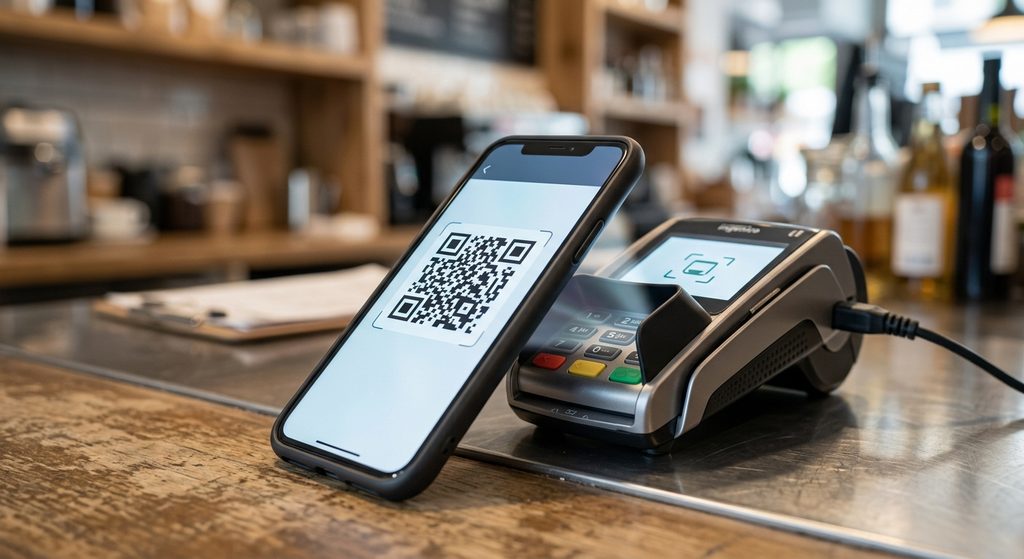
The mechanics are uniform, and understanding them explains why the tourist route works at all. A merchant generates a QR code linked to their Pix account, either as a dynamic code carrying the amount or as a static code printed and reused. The payer scans it with a compatible app, reviews the amount and the merchant’s details on screen, and confirms. The money leaves the payer’s balance and lands in the merchant’s account within seconds, at any hour, with no card network in between. In the standard Brazilian case the payer’s app is their own bank app and the balance comes from their own account. In the tourist case an intermediary holds the balance and settles the merchant’s side in reais. That substitution is the whole trick: because the merchant only ever sees a normal Pix settlement, the payer’s nationality and lack of a CPF become invisible on the receiving end.
The wallets that bridge the gap
Three names dominate the conversation among travelers, and they solve the problem in slightly different ways.
The WanderWallet mobile app is built for travelers and expatriates who want to pay like a local across Latin America. It operates in Brazil, Argentina, Colombia, and Bolivia, connecting the user to each country’s own rails: Pix in Brazil, Mercado Pago in Argentina, Bre-B in Colombia, and QR Simple in Bolivia. In Brazil it lets the holder scan Pix QR codes and also pay to Pix keys by phone number, email, CPF, or random key, covering shops, restaurants, rent, and person-to-person transfers. Sign-up requires identity verification with a passport or national ID plus a selfie, and no CPF or Brazilian bank account is needed. Funds are topped up by bank transfer, Revolut banking apps, or stablecoins, and the balance is held in US dollars or euros until it is actually spent, so the user is not exposed to the real before spending. Before a payment is confirmed, the app shows the amount due, the exact conversion to dollars, and any applicable fee.
Peanut app approaches the same problem with an explicit focus on cost. It advertises Pix access without a CPF, verified with any passport in a few minutes, and targets the tax that normally makes cross-border money expensive in Brazil. Deposits arrive as digital dollars through several blockchain networks or from a bank account via SEPA, ACH, or wire transfer, and Peanut charges nothing on deposits, Pix payments, or withdrawals. The balance stays in digital dollars and converts to reais at the market rate only when a payment is made. The company argues that because this path sits outside Brazil’s IOF, the tax on financial operations, its users avoid the levy that otherwise applies to outbound transfers, inbound transfers, and credit card spending. The rate is locked at the moment of payment, and the merchant receives reais instantly and sees an ordinary Pix payment. Identity documents are processed by a third-party verification provider, and for LATAM users the service applies a monthly limit of about two thousand dollars across deposits, withdrawals, and Pix payments.
PagBrasil occupies a different position. It is a São Paulo payment processor rather than a consumer wallet, and it builds the infrastructure that lets banks and wallets elsewhere offer Brazil-facing Pix payments to their own customers. For a tourist, the practical effect is that the home banking app or wallet they already use may quietly support scanning a Brazilian QR code, with PagBrasil handling conversion and the merchant-side regulatory work behind the scenes. It is not an app a traveler downloads and signs up for directly, but it is one of the reasons the option exists at all.
What the wallets cost and where they fall short
The convenience is not free, and an honest account has to name the trade-offs. The exchange rate a wallet shows is rarely the mid-market rate, so a small margin is embedded in every payment even when the app advertises no fee. Funds sit with a third party between top-up and spending, which introduces counterparty risk: an app that freezes an account, changes its terms, or goes silent mid-trip can strand a balance. Verification and coverage also vary. Some wallets are open to holders of almost any passport, while others restrict their service to specific regions, and the terms shift as providers expand or pull back from countries. Limits, such as Peanut’s monthly ceiling for LATAM users, can bind a longer stay even when the individual payments are small. The sensible response is to load only what the trip is likely to consume, to keep a second payment method available, and to check the current state of each provider directly rather than trusting a review written months earlier.
Paying in practice
In a restaurant, the waiter brings the bill or points to a QR card on the table. The visitor opens the chosen wallet, scans, and confirms; the merchant’s phone registers the payment within seconds. In a supermarket, the code may appear on the checkout display or be presented by the cashier, and self-checkout lanes frequently show a dynamic QR. At a street vendor or a market stall, the code is typically static and taped to the counter, and the buyer enters the amount manually before confirming. Throughout, the visitor never needs a Pix key of their own, a Brazilian phone number, or a local account, because the wallet carries that burden. What the visitor does need is a working internet connection at the moment of payment, since the scan and the confirmation happen live and can never be queued.
Preparing before you land
The work belongs before the flight, not at the counter with a queue behind you. Setting up the wallet in advance lets the traveler finish identity verification, link a funding source, and confirm that the app actually functions from their home country, all without time pressure. It is also the moment to compare the true cost of each option, since the advertised absence of fees rarely tells the whole story once the conversion margin is included. A traveler who arrives with a funded wallet and a credit card as backup is prepared both for the QR-only counter and for the terminal that rejects a foreign card. One who arrives with neither discovers the gap at the worst possible moment, holding a bill that neither their card nor their phone can settle.
Pix was built by and for Brazilians, and its architecture still reflects that origin. But the QR code that Brazilians scan every day has, through processors like PagBrasil and wallets like WanderWallet and Peanut, become reachable from the outside. For the tourist without a CPF, the door is narrower than it is for a resident and it carries a cost, yet it is no longer closed. The visitor who sets up the right app before leaving home can pay at the table the way everyone around them does, which is the only outcome that matters when the bill arrives.